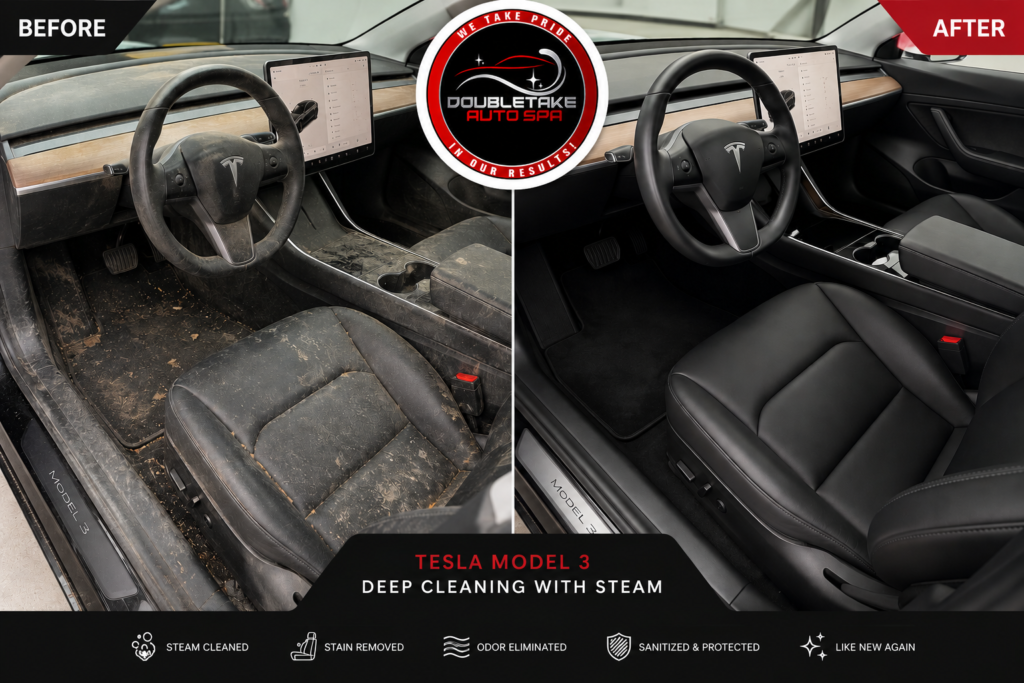
Most vehicle owners assume that a vacuum and a quick wipe-down are enough to keep their interior clean. While regular maintenance certainly helps, it often leaves behind a surprising amount of dirt, bacteria, allergens, and contaminants hidden deep within carpets, upholstery, vents, and hard-to-reach crevices.
The reality is that a vehicle’s interior is one of the most frequently touched environments in daily life. Steering wheels, door handles, touchscreens, cup holders, seat belts, and center consoles are constantly exposed to dirt, body oils, food residue, dander, and airborne contaminants. Over time, these substances accumulate beneath the surface where traditional cleaning methods struggle to reach.
In many cases, dirt and bacteria are not sitting on top of the surface. Instead, they have worked their way into the material itself. This is particularly common in family vehicles, rideshare vehicles, commuter cars, and vehicles that transport children or pets.
Even well-maintained vehicles can accumulate years of buildup in areas that owners rarely see. As a result, an interior may appear clean while still harboring contaminants below the surface.
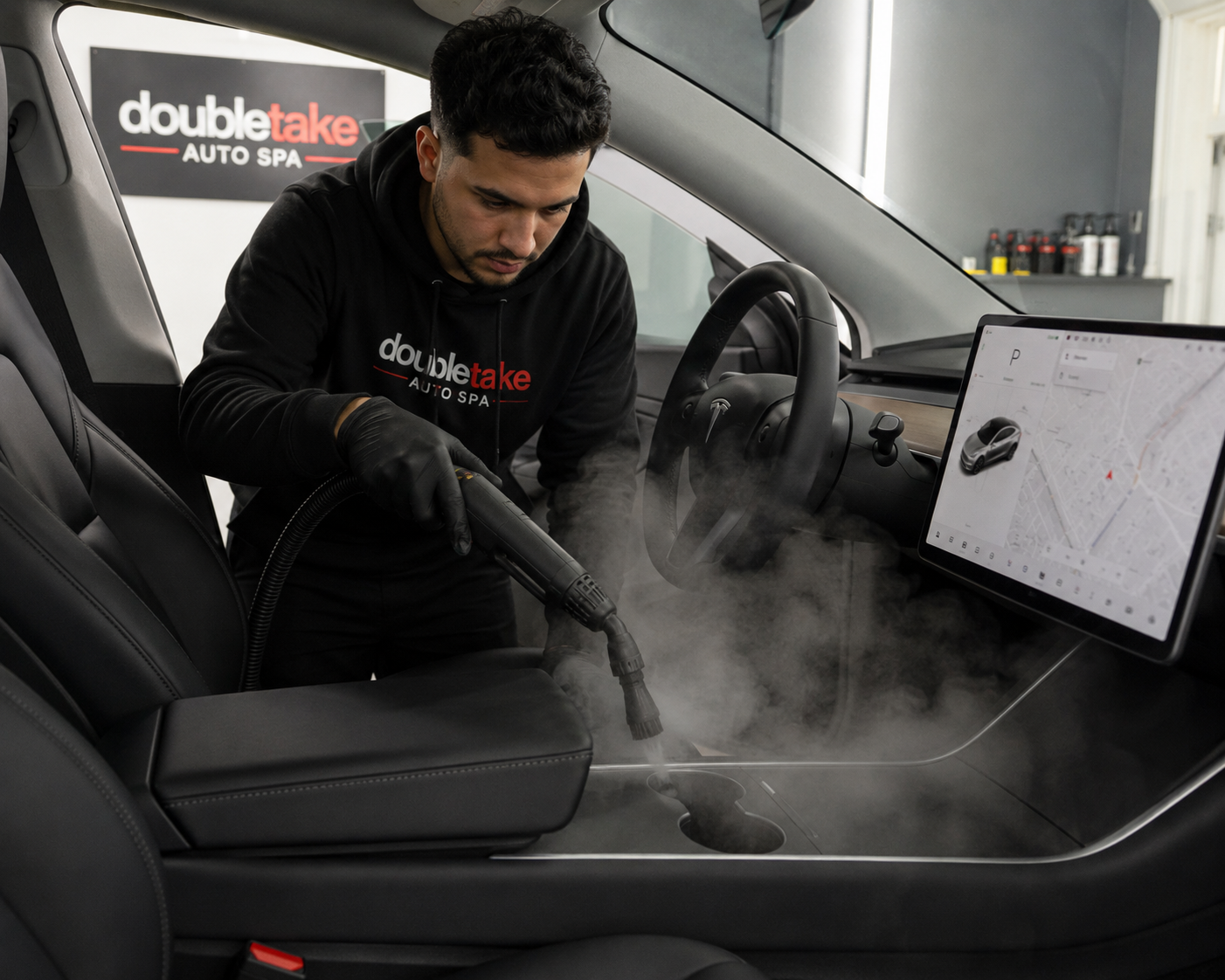
This is why professional detailers increasingly rely on steam cleaning as one of the most effective methods for restoring and maintaining a vehicle’s interior. By combining high-temperature vapor with minimal moisture, steam cleaning offers a deeper level of cleaning than many conventional detailing techniques.
How Steam Cleaning Works
Steam cleaning utilizes water heated to extremely high temperatures, producing vapor that penetrates porous surfaces and loosens embedded contamination. Unlike traditional extraction methods that often rely on large amounts of water and cleaning chemicals, steam cleaning uses relatively low moisture while delivering significant cleaning power.
According to cleaning experts at Better Homes & Gardens, steam cleaning can effectively loosen dirt, grease, and grime while reducing the need for harsh chemical cleaners. The combination of heat and vapor allows contaminants to be lifted from surfaces that would otherwise require aggressive scrubbing or repeated chemical treatments.
For automotive interiors, this means a more thorough cleaning process that can reach areas often missed during standard detailing services.
The Science Behind Steam and Sanitization
One of the most significant advantages of steam cleaning is its ability to help reduce bacteria and microorganisms on surfaces. High-temperature steam has long been used in healthcare, hospitality, and commercial cleaning environments because of its effectiveness in cleaning and sanitizing without excessive chemical use.
Research published through the National Library of Medicine found that steam cleaning was highly effective at reducing dust mites and allergens in household environments. While a vehicle interior presents a different environment, the same principles apply. Heat penetrates fabrics and surfaces, helping break down contaminants that conventional cleaning methods may leave behind.
For vehicle owners concerned about cleanliness, especially families with young children, steam cleaning offers an additional level of confidence beyond simple surface wiping.
A Better Solution for Allergens and Air Quality
Many of the contaminants affecting a vehicle’s interior are invisible to the naked eye. Pollen, dust mites, pet dander, and other allergens can become trapped within carpets, seats, floor mats, and upholstery.
Over time, these particles can circulate throughout the cabin every time the vehicle is driven. This can be particularly frustrating for individuals who suffer from seasonal allergies or respiratory sensitivities.
Steam cleaning helps remove these contaminants from deep within interior materials. Because the process relies primarily on heat rather than heavy chemical application, it can provide a more comprehensive cleaning solution while leaving behind fewer residues.
This is one reason why steam cleaning has become increasingly popular among homeowners, healthcare facilities, and professional cleaning companies looking to improve overall cleanliness and indoor air quality.
Less Reliance on Harsh Chemicals
Many traditional interior cleaning products rely on strong detergents and solvents to break down dirt and stains. While these products can be effective, they often leave behind residues that continue to attract dirt or create unwanted odors.
Steam cleaning approaches the problem differently. The cleaning power comes primarily from heat rather than chemicals. This allows professional detailers to significantly reduce their reliance on aggressive cleaners while still achieving impressive results.
For vehicle owners who transport children, pets, or passengers with sensitivities to fragrances and chemicals, this can be a meaningful advantage.
Reaching Areas That Conventional Cleaning Often Misses
One of the reasons steam cleaning has become such a valuable tool in professional detailing is its ability to access areas that are otherwise difficult to clean thoroughly.
Steam can penetrate tight spaces such as:
- Air vents
- Seat tracks
- Cup holders
- Dashboard seams
- Center console gaps
- Door panel crevices
- Steering wheel controls
These areas often accumulate years of dust, grime, food particles, and debris. Traditional cleaning tools may only address the visible portion of the contamination, while steam can penetrate deeper into these confined spaces.
The result is a cleaner and more complete interior restoration.
Faster Drying and Reduced Moisture
One concern many vehicle owners have when scheduling an interior detail is drying time. Traditional carpet extraction and shampooing methods can introduce substantial amounts of water into the vehicle’s interior.
Excess moisture can increase drying times and, in some cases, contribute to lingering odors if not properly removed.
Steam cleaning utilizes significantly less moisture than many conventional cleaning methods. Because the vapor contains relatively little water, surfaces often dry more quickly while still receiving a deep clean.
This makes steam cleaning particularly appealing for busy vehicle owners who want professional results without extended downtime.
Why Professional Steam Cleaning Delivers Superior Results
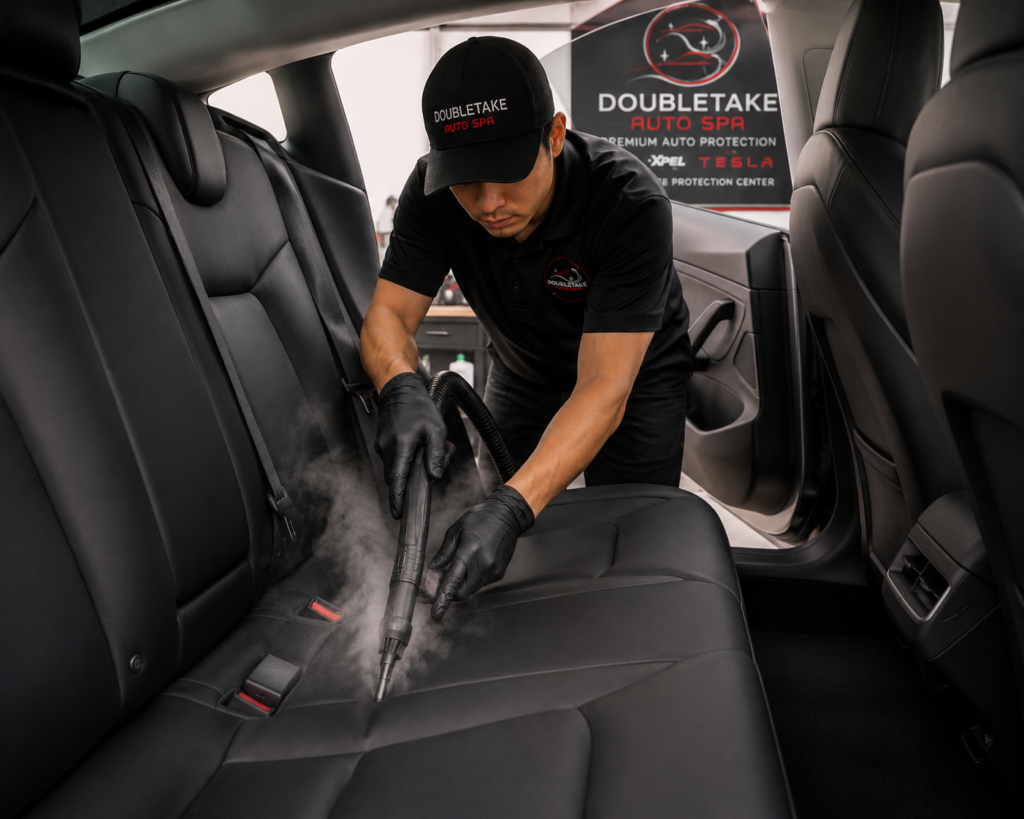
While consumer-grade steam cleaners are widely available, professional automotive steam cleaning equipment operates at higher temperatures and is used alongside specialized detailing techniques developed specifically for vehicle interiors.
At DoubleTake Auto Spa, our Interior Deep Cleaning With Steam service is designed to go beyond surface-level cleaning. We focus on removing embedded contamination, restoring neglected areas, and creating a cleaner, fresher cabin environment for our clients.
The goal is not simply to make the interior look clean for a few days. The goal is to provide a deeper level of cleanliness that improves the overall ownership experience.
Final Thoughts
A vehicle’s interior faces constant exposure to dirt, allergens, bacteria, spills, and daily wear. Traditional cleaning methods can improve appearance, but they often leave behind contamination hidden beneath the surface.
Steam cleaning offers a more advanced approach. By utilizing high-temperature vapor, professional detailers can clean deeper, reach difficult areas, reduce reliance on harsh chemicals, and create a fresher, healthier interior environment.
For vehicle owners seeking more than a basic detail, Interior Deep Cleaning With Steam represents one of the most effective ways to restore, maintain, and protect the place where they spend countless hours every week.
Frequently Asked Questions
1. Is steam cleaning safe for leather, fabric, and vehicle interiors?
Yes. When performed by trained professionals using commercial-grade equipment, steam cleaning is safe for leather, cloth upholstery, carpets, plastics, vinyl, and many interior surfaces. The process uses high-temperature vapor with minimal moisture, allowing us to clean deeply without soaking the materials.
2. Can steam cleaning remove odors from my vehicle?
Steam cleaning helps eliminate many odor-causing contaminants by removing the dirt, bacteria, food residue, and organic buildup that often create unpleasant smells. While it significantly improves most interiors, severe odors caused by mold, smoke, or extensive biological contamination may require additional odor treatment services.
3. How often should I have my vehicle steam cleaned?
For most drivers, a professional Interior Deep Cleaning With Steam every 12 to 18 months helps keep the cabin fresh and hygienic. Families with children, pet owners, rideshare drivers, or anyone who spends a lot of time in their vehicle may benefit from steam cleaning every 6 to 12 months.
4. Does steam cleaning use harsh chemicals?
One of the biggest advantages of steam cleaning is that it relies primarily on high-temperature vapor rather than heavy chemical cleaners. This allows us to reduce the use of harsh detergents while still delivering an exceptional deep clean, making it a great option for families, pets, and those sensitive to strong fragrances.
5. What’s the difference between a regular interior detail and Interior Deep Cleaning With Steam?
A standard interior detail focuses on vacuuming, wiping surfaces, and cleaning visible dirt. Interior Deep Cleaning With Steam goes much further by penetrating seat seams, carpets, vents, cup holders, door panels, and other hard-to-reach areas to loosen embedded dirt, bacteria, allergens, and grime that traditional cleaning methods often leave behind. The result is a cleaner, fresher, and more thoroughly restored interior.