Leaving your car paint exposed to the elements is a gamble that most vehicle owners lose without realizing it. You might think that washing your vehicle every couple of weeks is enough to keep it in prime condition. However, microscopic damage starts happening the moment your car leaves the showroom floor. Over time, this small-scale wear turns into massive, permanent cosmetic issues. At DoubleTake Auto Spa, we see the results of this neglect every day on otherwise beautiful vehicles.
Modern automotive factory paint is actually thinner and more delicate than it was decades ago due to environmental regulations on volatile organic compounds. According to a report, modern regulations require a 33% reduction in VOC content from automotive coatings, which necessitated reformulation to lower-solids water-based clear coats. This means your vehicle has lower protection against UV rays and environmental fallout. Without extra shielding, your car’s paint slowly deteriorates.
How Does UV Radiation Fade and Oxidize Your Paint?
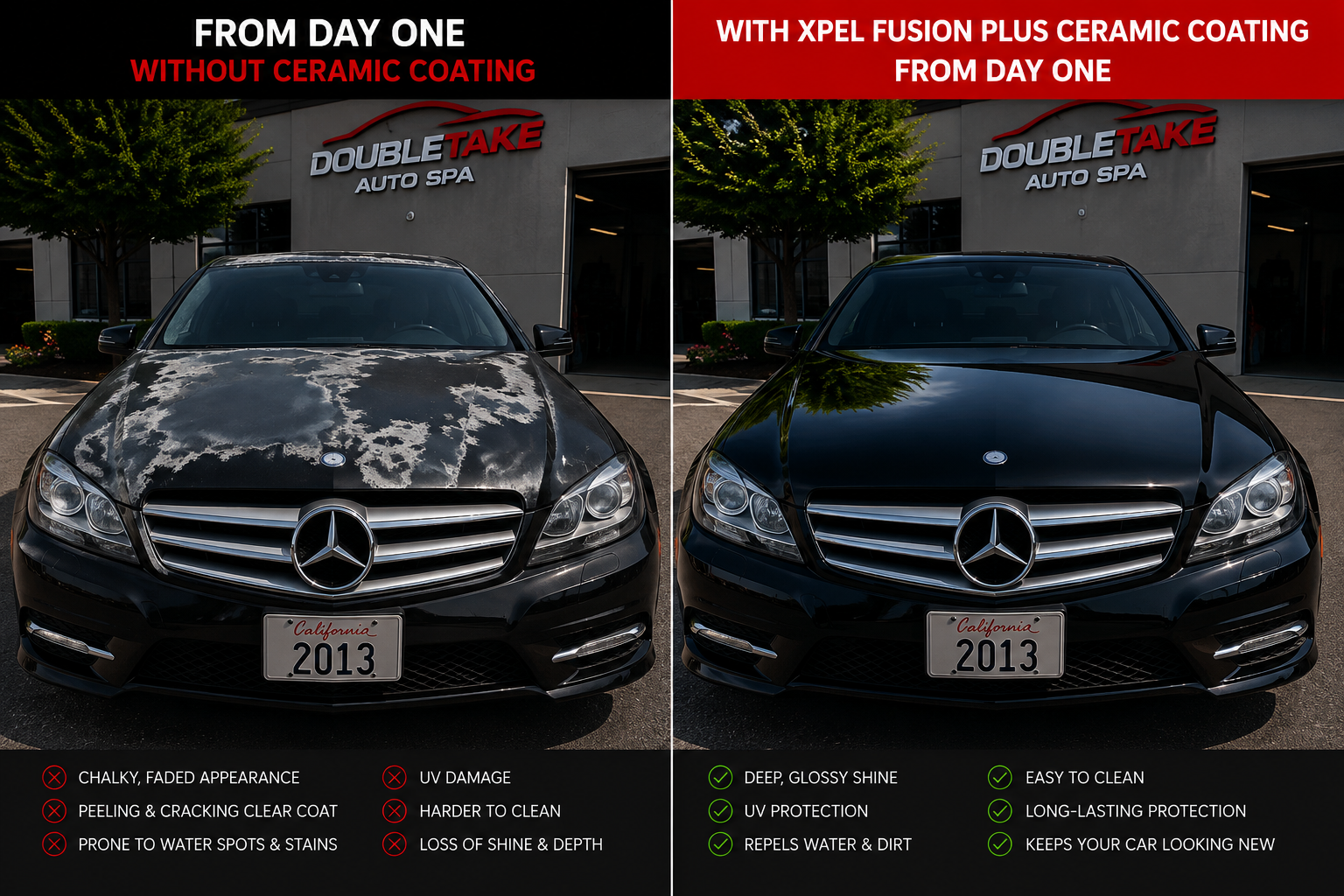
Sunlight is the primary long-term enemy of your vehicle’s finish. When your car sits outside under the intense California sun, ultraviolet rays constantly bombard the exterior. These UV rays break down the chemical bonds within the clear coat. Over time, this molecular damage leads to a severe condition called oxidation.
Oxidation starts slowly. You might notice a slight loss of gloss at first. Then, the paint begins to take on a chalky, cloudy, or white appearance. Studies show that cars parked in direct sunlight for more than four hours a day lose their gloss 20% faster than sheltered vehicles. Once the clear coat completely oxidizes and peels, the paint underneath is exposed and will fade unevenly.
At this point, the damage is completely irreversible by regular detailing or polishing. The only way to fix dead, oxidized paint is an expensive, total vehicle repaint.
To avoid this costly nightmare, you can learn more about setting up a defensive barrier early.
Why Do Water Spots Etch So Deeply Into Unprotected Surfaces?
Water seems harmless, but it poses a major threat to unprotected clear coats. Rain, morning dew, and lawn sprinklers are full of dissolved minerals like calcium and magnesium. When water puddles on your car hood and evaporates in the sun, it leaves these hard minerals behind in concentrated circles.
Without a slick layer of protection, these mineral deposits bond tightly to your paint. As the sun heats the metal panels, the minerals become highly reactive and chemically etch into the clear coat. They eat away at the gloss, leaving permanent microscopic craters.
The same chemical etching happens when bird droppings or squashed bugs sit on your vehicle. These organic materials are highly acidic. Within just a few hours of sun exposure, they can bake right through a bare clear coat and leave ugly, permanent scars.
If you want to see how defensive coatings keep these acids from touching your paint, you can request a free vehicle consultation with a surface specialist.
How Do Daily Contaminants Build a Rough and Dull Paint Surface?
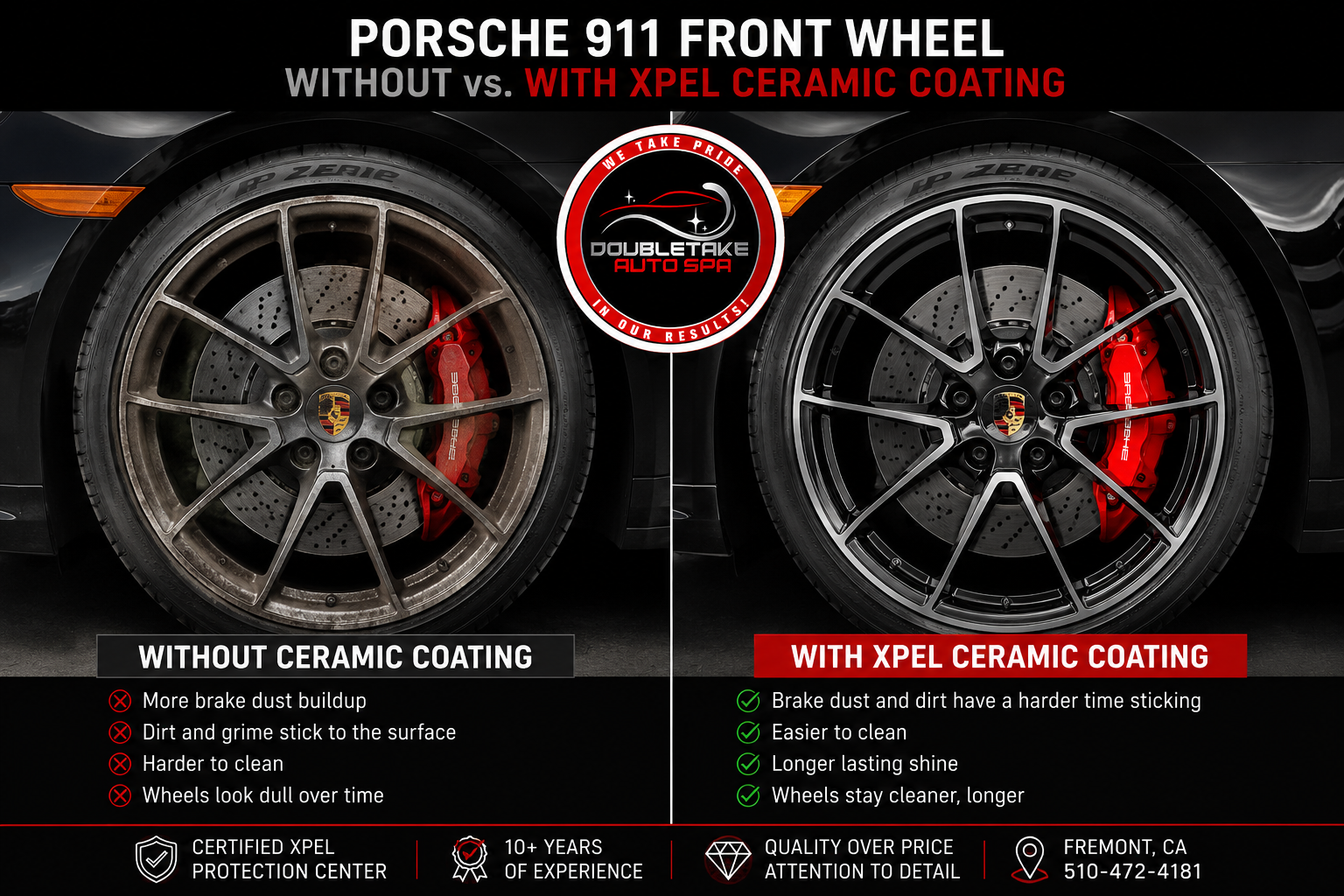
Every single day you drive, your vehicle collects a cocktail of invisible road pollution. This includes industrial fallout, brake dust, airborne tar, tree sap, and sea salt. When your paint lacks a hydrophobic shield, the surface energy increases. This means the paint behaves like a magnet for contaminants.
- Brake dust particles are microscopic pieces of sharp metal that fly off brakes and embed themselves deeply into the clear coat.
- Tree sap and road tar glue themselves down and create sticky hot spots.
- Industrial pollution creates a dull film over the entire body of the vehicle.
If you run your hand across your car doors after a few months without protection, the surface will feel rough like sandpaper. This rough texture ruins the reflective quality of the vehicle, making the color look dead and muted.
What Does Constant Deterioration Look Like After a Few Years?
The psychology of car care usually tricks us into thinking everything is fine until it is too late. The slow damage people ignore accumulates quietly month after month. Driving an unprotected vehicle means your investment is in a state of constant, non-stop deterioration.
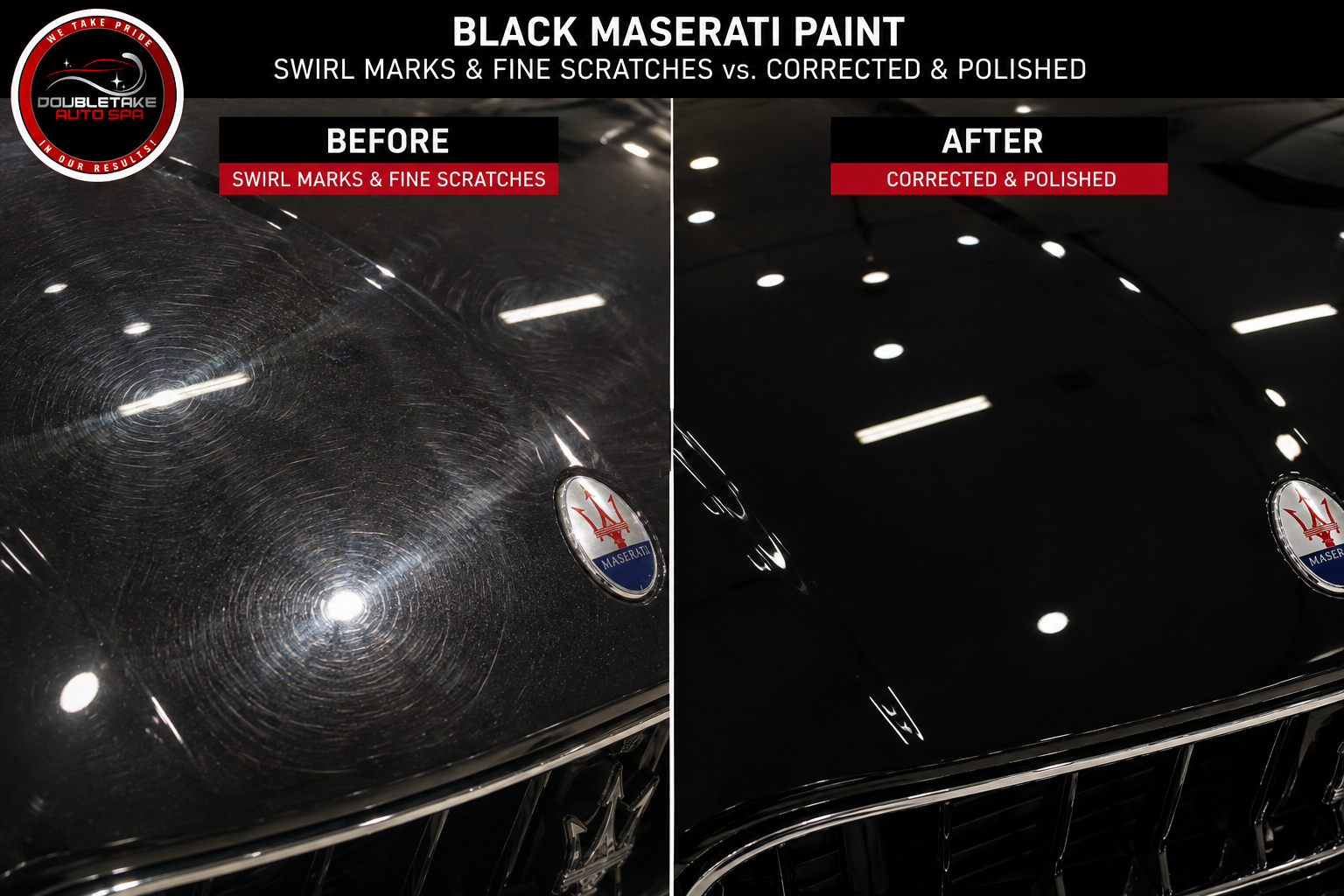
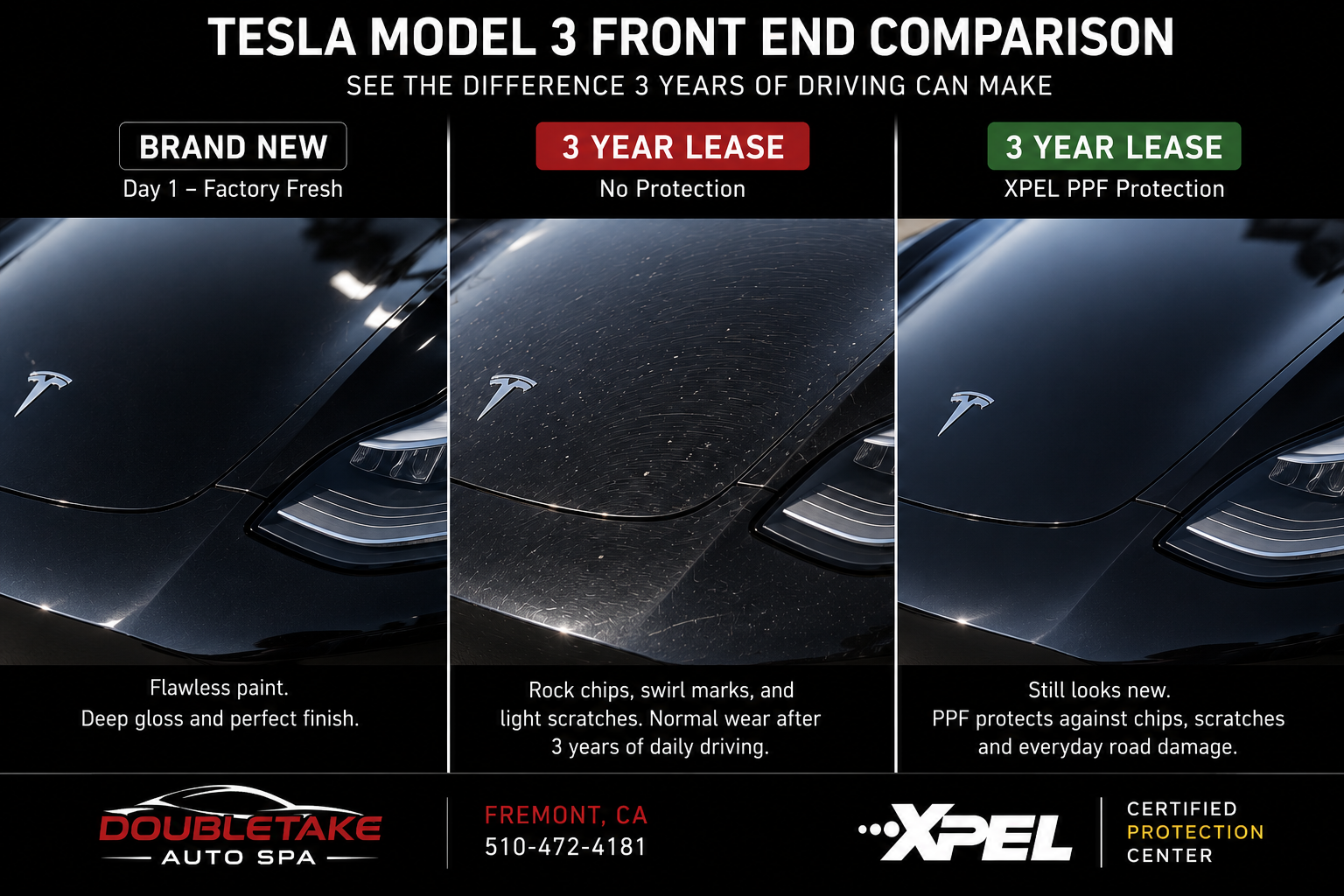
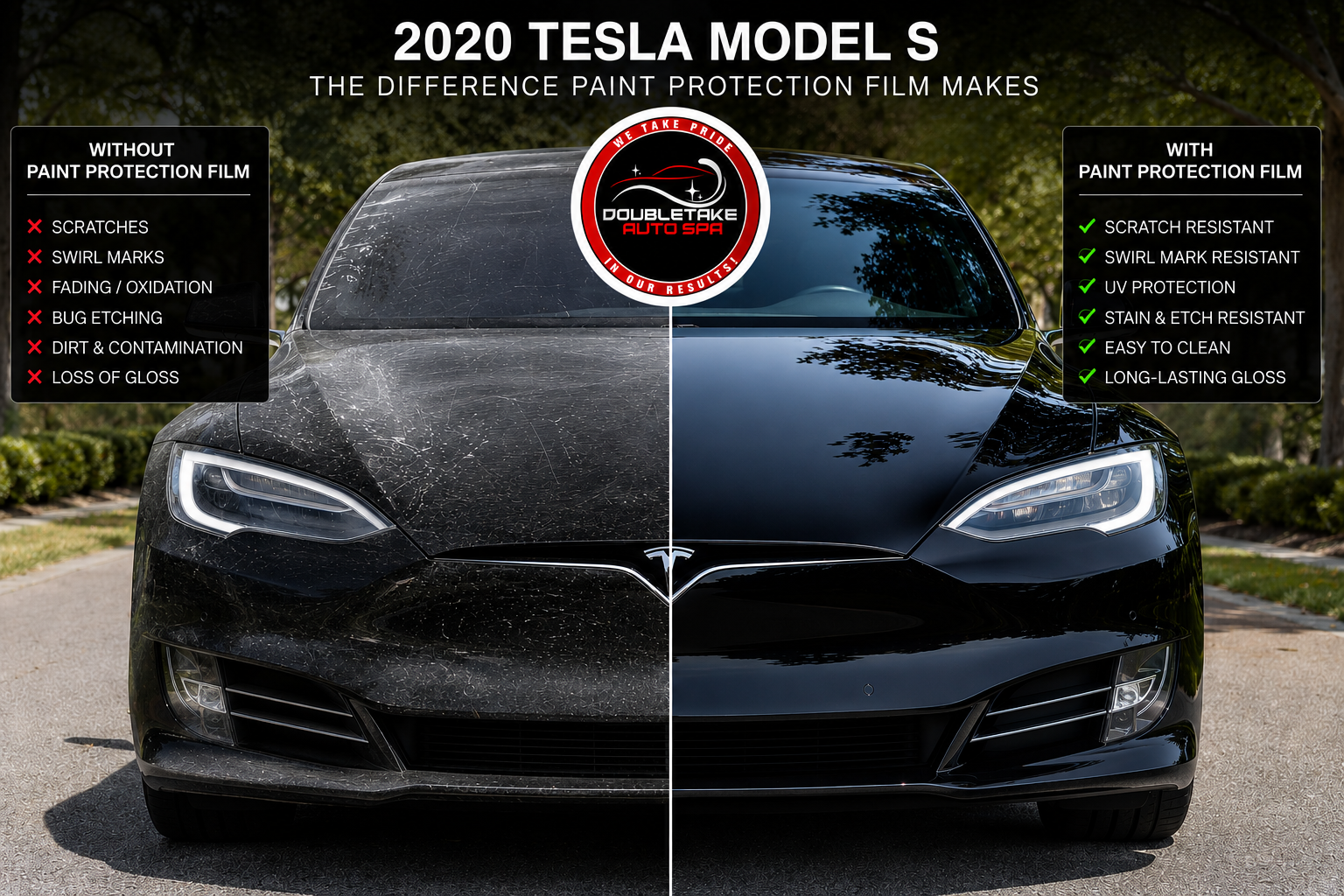
Within one to two years, you will experience the fear of regret when you notice deep swirl marks from washing, thousands of tiny micro-scratches, and a completely flat look. Rock chips from the highway will easily puncture the thin, bare factory clear coat, leaving exposed metal that can quickly rust.
Your vehicle will get dirty much faster, stain easily, and become incredibly difficult to wash because dirt has a rough surface to cling onto. The future layout of an unprotected car is a heavily depreciated asset that has lost its premium aesthetic appeal.
How Does a Ceramic Coating Block Long-Term Paint Damage?
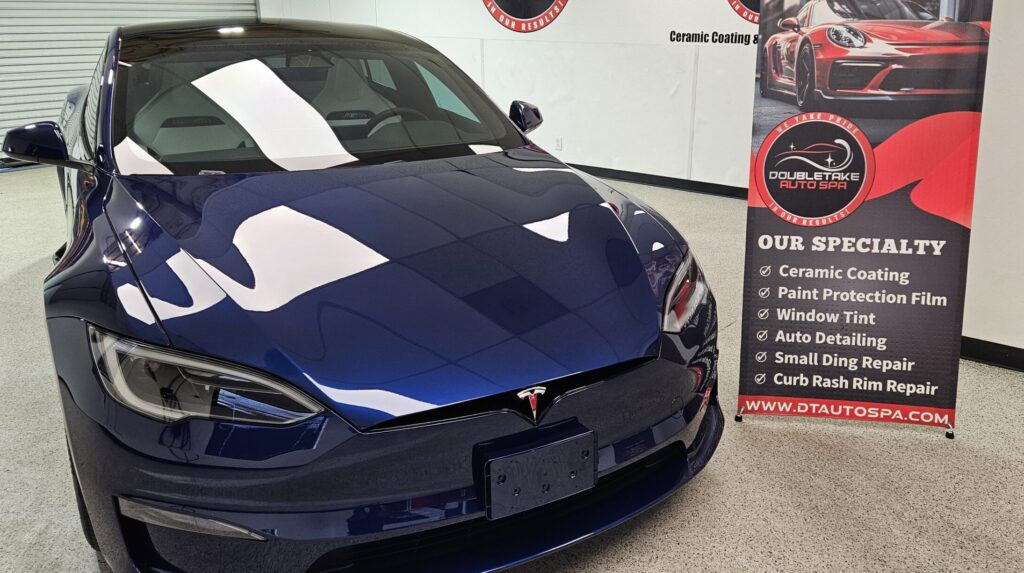
Fortunately, you do not have to let your vehicle succumb to these long-term consequences. A premium ceramic coating acts as an advanced, sacrificial nanostructured barrier that slows down and completely blocks environmental damage. Unlike traditional waxes that sit loosely on top of the surface and melt away in the summer heat, a ceramic coating forms a permanent chemical bond with your factory clear coat.
- Blocks UV rays: It seals out oxygen and reflects ultraviolet radiation to prevent oxidation and fading.
- Creates a hydrophobic shield: Water rolls off instantly in round beads, taking surface dirt with it and minimizing water spot etching.
- Resists chemical attack: The high cross-link density resists acidic bird droppings, industrial fallout, and road grime.
- Delivers an easy-to-clean gloss: It fills in microscopic paint pores to create a slick, jaw-dropping shine that keeps your car looking freshly detailed.
If you want the ultimate level of defense against physical road debris, pairing a coating with Paint Protection Film (PPF) is the smartest move. PPF provides a thick, self-healing layer that stops rock chips, deep scratches, and road scuffs completely.
How Can You Maintain Your Vehicle for the Long Haul?
Preserving a vehicle means thinking long-term, not just quick fixes. Environmental factors slowly erode your factory’s clear coat over time. That reduces both the beauty and resale value of your investment. Choosing modern, high-grade surface protection freezes your car’s condition in time. It shields it from daily road hazards, too.
At DoubleTake Auto Spa, we specialize in premium paint protection film, ceramic coatings, and precision detailing for owners who demand craftsmanship.
You can contact us today to learn about our customized defensive packages and schedule an appointment to protect your ride.
43122 Christy St, Fremont (Off Auto Mall), Fremont, CA 94538
We’re social! Instagram @dtautospa | Facebook: DTAutospa
Frequently Asked Questions
1. Can a ceramic coating fix existing paint damage?
No, defensive coatings protect your clear coat but cannot repair deep scratches, rock chips, or existing oxidation. You must fix these flaws through professional paint correction before applying any advanced surface layers.
2. How often should I wash a protected car?
We recommend a safe hand wash every two weeks. Even with an easy-to-clean gloss shield, allowing abrasive road salt or heavy industrial fallout to sit on the surface for months can degrade the barrier prematurely.
3. Will window tint prevent interior fading?
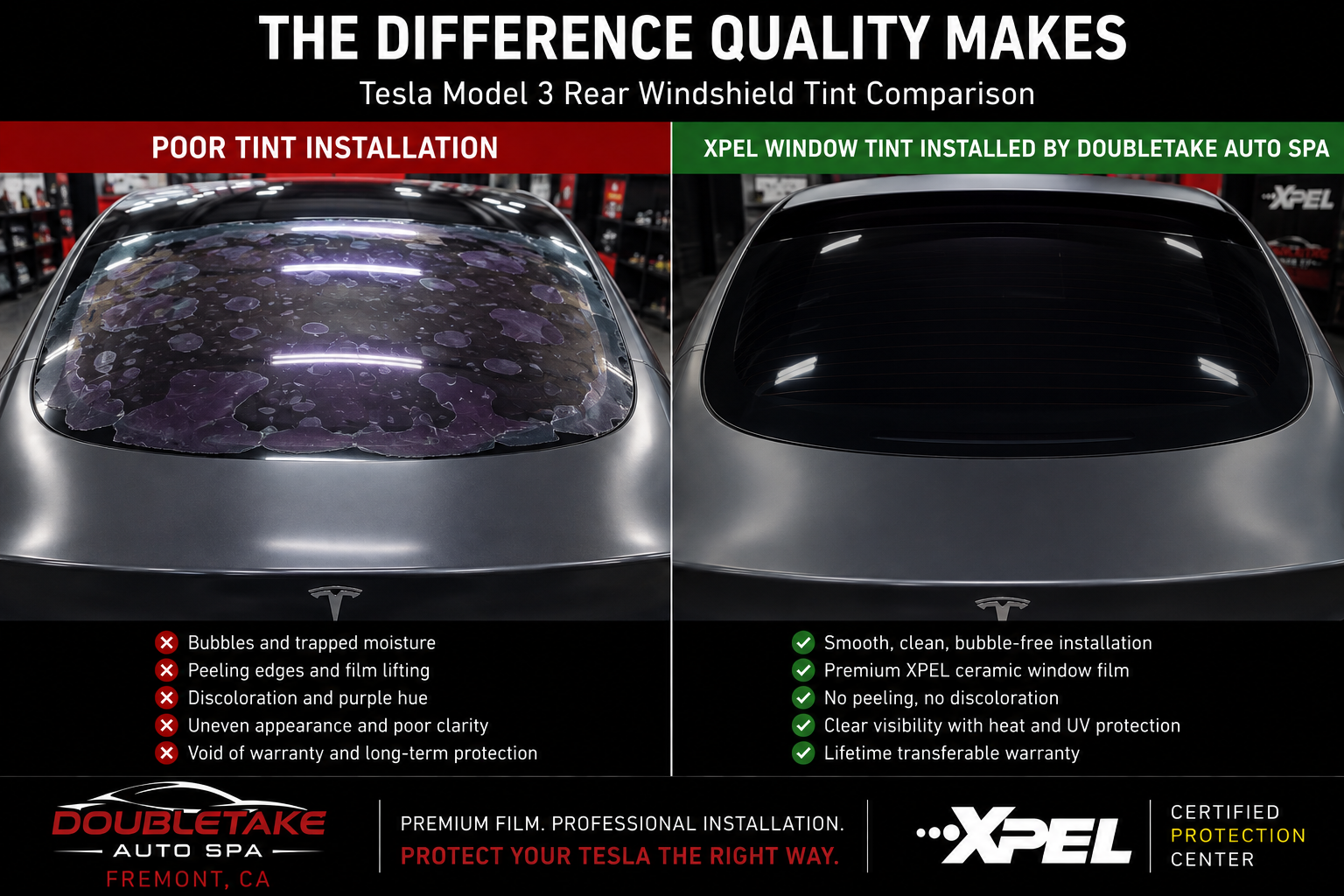
Yes, high-grade window tint blocks 99% of destructive UV rays. This prevents your dashboard, leather seats, and plastic trim from drying out, cracking, and fading over time.
4. Does paint protection film cover the whole car?
You can choose. Many owners opt for a partial package covering high-impact areas like the front bumper and hood, while others choose full-body coverage for maximum security.
5. Is professional auto detailing still necessary after coating?
Yes, routine interior care and exterior decontamination washes keep your vehicle in top condition. Decontamination clears embedded metallic dust that standard washes miss.